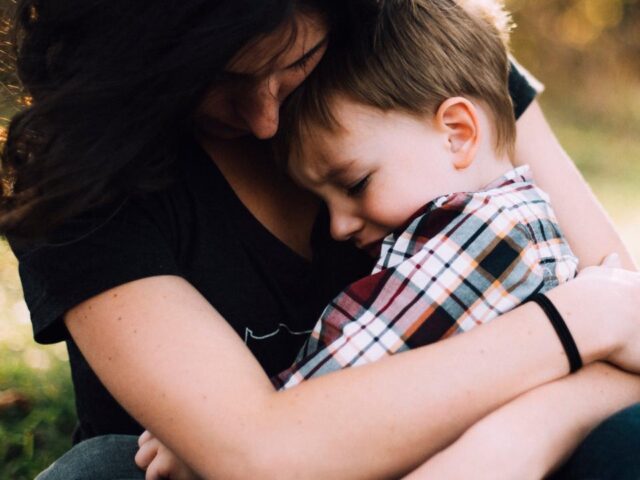
My daughter had two weeks of stomach aches leading up to switching preschools, even though the actual first day ended up going better than either of us expected.
Starting a new school, whether it’s a first-ever enrollment or a switch mid-way through, is one of the bigger transitions a kid navigates, and the lead-up is often harder than the day itself.
Here’s what actually helps a kid through this transition, before, during, and after the first day.

Why this transition looks different from a typical hard day
Most ordinary hard days resolve within hours, but a new school transition asks a kid to sustain adjustment effort across weeks, which is a genuinely different kind of endurance than the shorter, single-day challenges kids more commonly navigate.
Why new school transitions hit so hard
A new school asks a kid to rebuild an entire social and physical map at once, new teachers, new classmates, new routines, new building layout, all simultaneously.
Even kids who are generally adaptable often feel real anxiety here, since the uncertainty itself, not knowing what to expect, tends to be harder than any specific known challenge.
This is true whether the switch is prompted by a move, a school change, or simply the jump from preschool to kindergarten. The underlying transition stress is similar across all of them.
Helping Your Child Through Starting a New School
Visit the new school in advance if at all possible
Even a brief tour, meeting a teacher, or seeing the classroom ahead of time turns an entirely unknown space into a partially familiar one before the first real day.
Talk through the specific logistics, not just the general idea
Where they’ll be dropped off, who they’ll sit with at lunch, what the schedule looks like, addresses the concrete anxieties that tend to matter most to kids, especially younger ones.
Practice the goodbye routine ahead of time
A short, consistent goodbye ritual, rehearsed a few times before the actual first day, reduces the anxiety of an unfamiliar separation moment.

Keep other routines stable during the transition
Holding bedtime, meals, and other daily rhythms steady during a school transition gives a kid’s system fewer simultaneous changes to adjust to at once.
Validate the nerves without over-promising a perfect day
“It might feel a little scary at first, and that’s okay” is more honest and more useful than promising everything will definitely go smoothly, which a kid may later feel was untrue.
What the first weeks often actually look like
Some kids adjust within days. Others take several weeks before a new school genuinely starts to feel familiar, and both timelines are within the range of typical adjustment.
Regression, clinginess, sleep disruption, or increased emotional sensitivity during the adjustment period is common and generally temporary, not a sign the transition is going badly.
Teachers at the new school are usually watching for adjustment signs too, and a brief check-in with them after the first couple of weeks can offer a useful outside perspective.

What tends to make the transition harder
Downplaying the kid’s nervousness, “there’s nothing to worry about,” can make them feel unheard rather than actually less anxious.
Making the goodbye moment longer and more drawn out, out of a parent’s own anxiety, often increases a kid’s distress rather than easing it.
Comparing the transition to how easily a sibling or another kid adjusted can add pressure rather than support, since every kid’s adjustment pace genuinely varies.
How this differs when a move is also involved
A school change tied to a family move adds a whole additional layer, since a kid is losing familiar friends and surroundings at the same time as facing a new school entirely.
Keeping in touch with old friends through a video call or letter during the early transition period can ease the sense of total loss that a combined move and school change often brings.
Acknowledging the loss directly, “it’s okay to miss your old school and your old friends,” rather than only focusing on the excitement of what’s new, validates the full, mixed reality of the experience.
What to do if the anxiety doesn’t ease after a few weeks
Persistent, significant distress well beyond the typical adjustment window, ongoing sleep disruption, refusal to attend, physical symptoms like stomach aches most days, is worth a conversation with the school counselor or your pediatrician.
A brief meeting with the new teacher to compare notes on how things look at school versus at home can clarify whether the difficulty is settling or actually deepening.
Most transitions do resolve with time and support. A small number benefit from some additional help, and getting that support early tends to shorten the harder stretch considerably.
How our own transition actually went
The stomach aches leading up to the switch were real and, in hindsight, mostly about the unknown rather than anything specific she could name.
We did a short visit to the new classroom a week before, met her teacher briefly, and walked through exactly what drop-off would look like, which visibly eased some of the tension.
The actual first day had a rough five minutes at goodbye and then, according to her teacher, was completely fine for the rest of the day. The anticipation turned out to be harder than the reality.
What role siblings starting the same new school together can play
Siblings transitioning to the same new school at once often draw real comfort from each other, even across an age gap, simply from having one familiar face somewhere in the building during an otherwise unfamiliar day.
Arranging a specific meeting point during the day, even briefly, can give an anxious younger sibling something concrete to look forward to and anchor around.
This shared experience can also become its own small bonding point between siblings, a genuinely useful side benefit of an otherwise stressful transition happening simultaneously for both of them.
What role a “buddy” system or introduction beforehand can play
If the new school allows it, arranging a brief connection with one future classmate before the actual first day, a short playdate, an introduction at orientation, gives a kid at least one familiar face to look for on the hardest first morning.
Even a single friendly, recognized name can meaningfully reduce the sense of walking into a room of total strangers, which is often one of the more concrete fears driving the broader anxiety.
What helped after the first day, not just before it
A consistent after-school check-in, the same simple question asked the same way each day, gave her an easy, low-pressure opening to share how things were actually going.
Patience with an adjustment period that took closer to three weeks than three days mattered more than expecting an instant, smooth transition.
Celebrating small wins along the way, a new friend’s name mentioned, a comfortable moment described, reinforced that things were genuinely getting easier, even gradually.
If school anxiety is the bigger piece of what you’re navigating, this deeper look at helping an anxious kid through school covers the wider version of this same challenge.
New school transitions are genuinely hard, for kids and for the parents watching them navigate it. Most kids do land on solid ground, even when the lead-up feels harder than it should.
What role a parent’s own visible nerves can play, without meaning to
A kid is remarkably good at picking up on a parent’s own anxiety about the transition, even when it’s never spoken directly, and a visibly tense parent at drop-off can inadvertently confirm a kid’s own fear that something’s genuinely wrong to be worried about.
Managing your own nerves privately, saving the harder feelings for after the goodbye rather than during it, gives a kid a genuinely calmer signal to take their own cues from in the moment.
What to pack or prepare that helps beyond the paperwork
A small, familiar comfort item tucked into a backpack, a family photo, a favorite small toy, a note written specifically for that first day, can give a kid a discreet, private source of reassurance available throughout the day without needing to ask for it.
Checking the school’s specific policy on personal items beforehand avoids an awkward moment of having it confiscated or questioned on the very day it was meant to help most.
What I’d tell a parent facing this transition soon
The anticipatory dread, both yours and your kid’s, is almost always worse than the actual experience turns out to be, even though that’s genuinely hard to believe in the lead-up.
Prepare what you reasonably can, and then trust that most of the rest will sort itself out with time, patience, and a kid’s natural resilience doing more of the work than any single strategy.
Whatever specific worry is looming largest right now, the lunchroom, the drop-off, the unfamiliar hallway, remember that most of it genuinely does resolve, quietly and gradually, once the actual first days are finally behind you both.