I found myself comparing my daughter’s climbing skills to a cousin’s at the same age, before remembering how wide the normal range actually is.
Gross motor milestones follow a genuinely wide range by age, and knowing the real picture eases a lot of unnecessary comparison, especially the kind that creeps in unintentionally at a family gathering or a playground.
Here’s what’s actually typical, and why the range is wider than most charts make it feel.
Why gross motor development varies so much
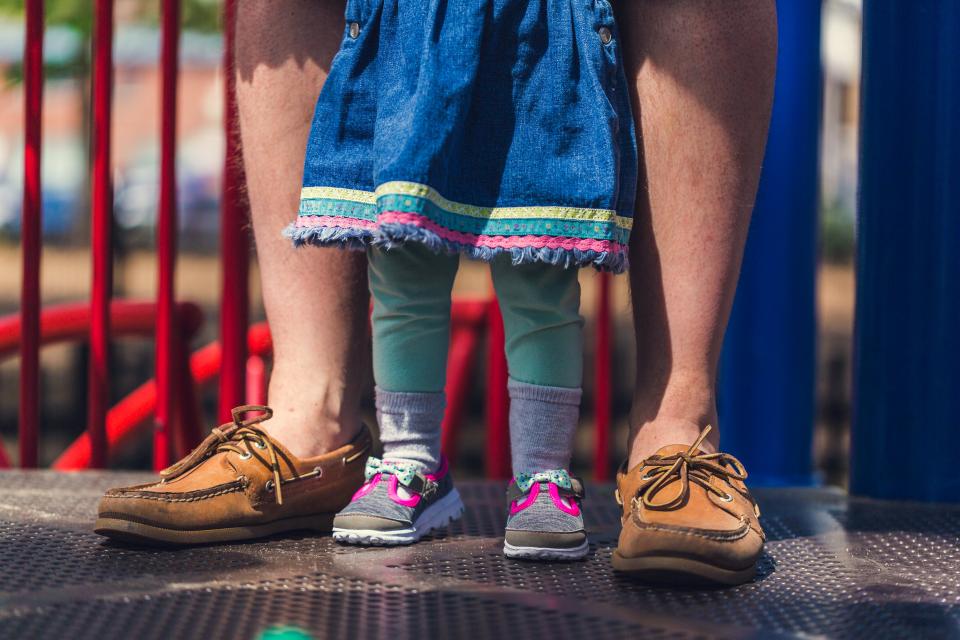
Large muscle movement skills, walking, running, climbing, develop on a genuinely individual timeline shaped by both biology and opportunity. A kid with more open outdoor space, or more older siblings to chase after, often has more raw practice hours than a kid without those same circumstances.
A milestone chart shows a general range, not a strict schedule every kid is expected to follow precisely. These charts are built from population averages, which by definition means plenty of perfectly typical kids fall earlier or later than the midpoint.
Understanding the actual range reduces unnecessary worry over normal, individual variation between kids. Once the range itself becomes the reference point, rather than a single peer, most of the comparison anxiety naturally eases.
Gross Motor Milestones by Age, Explained Simply
Around one year
Standing independently and taking first steps, with support gradually decreasing, is typical around this age. Some kids walk confidently by ten months, others not until closer to sixteen or seventeen months, and both are well within the normal range.
Around two years
Running, climbing stairs with support, and kicking a ball are common emerging skills at this stage. Coordination is still developing, so expect a wobbly, enthusiastic version of each of these rather than a polished one.
Around three years
Jumping with both feet, pedaling a tricycle, and climbing stairs independently typically develop around this age. This is often the stretch where physical confidence visibly starts outpacing physical caution, which comes with its own set of new challenges.

Around four to five years
Hopping on one foot, catching a ball, and more coordinated running typically develop during this stretch. Balance and coordination take a noticeable leap forward during these years, often visible in how differently a kid moves across just a single year.
School age
More complex coordination, skipping, riding a bike without training wheels, and organized sports skills continue developing. This is also the age range where individual differences in athletic interest and aptitude start to become more visible.
What actually supports gross motor development
Unstructured outdoor play gives natural, repeated practice across a wide range of physical skills simultaneously. A single afternoon at a playground offers more genuine motor practice, running, climbing, balancing, jumping, than most structured activities packed into the same amount of time.
Limiting extended sitting time provides more actual opportunity for movement-based skill development. It’s not about eliminating quiet activities entirely, just making sure movement has real, regular room in the day.
Following a kid’s own interests, climbing, running, ball play, tends to build more consistent practice than a structured program alone. A kid who genuinely loves climbing will practice it far more often, and with far more enthusiasm, than one being steered toward an activity they’re lukewarm about.
What tends to cause unnecessary comparison
Comparing your kid to a single peer or sibling, rather than the general range, tends to create worry disproportionate to the actual situation. One specific comparison point tells you almost nothing statistically meaningful.
Assuming every kid should hit every milestone at the exact same point misses how wide the genuinely typical range actually is. Even within a single family, siblings often show noticeably different gross motor timelines without either one being cause for concern.
Focusing on your own kid’s specific trajectory over time gives a more accurate, less anxious picture. Steady, forward progress, even if slower than a specific peer, is the actual signal worth watching for.
When it’s worth mentioning to a pediatrician
A significant, persistent delay across multiple gross motor skills, rather than one isolated area, is worth a direct conversation. A broad pattern carries more weight than a single skill lagging behind.
Regression, losing a previously achieved skill, is also worth mentioning regardless of the specific age. Moving backward is a different signal than simply developing more slowly than average.
Most variation within the wide typical range, though, resolves on its own without any need for concern.
What role individual temperament plays
Cautious kids often approach new physical skills more slowly, taking more time to attempt something before mastering it. A cautious kid might watch other kids on the monkey bars for weeks before attempting it themselves, and that watching period is itself a real form of preparation.
More adventurous kids sometimes attempt skills earlier, with less regard for actual readiness or safety awareness. This brings its own set of challenges, more scrapes and closer supervision, even as it can look like more impressive early progress.
Neither pattern predicts anything about long-term physical ability, just a difference in approach and pacing.
How to support a more cautious kid without pushing too hard
A cautious kid often benefits more from a low-pressure environment to observe and attempt at their own pace than from direct encouragement to “just try it.” Repeated gentle exposure, without a specific push to perform, tends to build genuine confidence faster than cheerleading from the sidelines.
Celebrating small, incremental attempts, even ones that don’t fully succeed, reinforces that trying itself is valued, separate from immediate mastery. A cautious kid who feels safe to attempt and fail without judgment tends to build courage steadily over time.
Comparing a cautious kid’s pace to a more adventurous sibling or peer rarely speeds up the process, and often has the opposite effect, adding pressure that makes genuine risk-taking feel even less safe.
What actually eased my own worry
Looking at the full typical range, rather than a single peer comparison, put her climbing pace into much more reasonable context. Once I saw how wide the actual range was, the specific comparison that had been bothering me stopped feeling meaningful at all.
She caught up to and then exceeded that same cousin within about six months, exactly as normal variation would predict. The worry, in hindsight, had been entirely about the comparison, not about her actual development.
If overall developmental milestones more broadly are on your mind, this look at 18-month milestones and what’s actually expected covers that related, broader picture.
Gross motor development spans a genuinely wide, normal range. Trust the general pattern over any single comparison.
How screen time and gross motor development actually interact
It’s worth being specific about this connection rather than treating all screen time as equally relevant to physical development. The concern isn’t screens themselves, it’s what screen time displaces during a stretch of childhood when physical practice matters enormously for building coordination and strength.
A reasonable amount of screen time, balanced against plenty of active play, isn’t going to meaningfully hold back gross motor development. The pattern worth watching for is a kid whose days are consistently dominated by sitting, regardless of the specific reason, since that’s the actual variable that matters here, not the screen itself.
Building movement into the day doesn’t require eliminating screens entirely. It just means making sure active time has real, protected room alongside everything else competing for a kid’s attention.
What a genuinely varied week of movement can look like
Rather than a single formal activity, a genuinely useful week of gross motor practice tends to include a real mix: a trip to a playground, some open backyard or park time, a bit of dancing or running around indoors on a rainy day, and maybe one more structured activity if a kid shows genuine interest in one.
Variety matters more than any single specific activity, since different movements build different skills, balance, strength, coordination, spatial awareness, and a kid naturally seeks out the ones that interest them most if given enough unstructured opportunity.
There’s no need to formally schedule or track this the way a structured class might be tracked. The goal is simply making sure real, varied movement has consistent room in an ordinary week, not turning it into another item to manage and optimize, or another source of pressure layered on top of an already full schedule.
Trusting that ordinary play, given consistent room to happen, does most of the real work here tends to lower the pressure considerably, both for the kid and for the parent trying to make sure enough of it happens.
What to do if a kid seems uninterested in physical play
Some kids simply gravitate less naturally toward physical play than others, preferring quieter, more sedentary activities most of the time. This isn’t automatically a red flag, temperament plays a real role in how a kid chooses to spend free time, separate from their actual physical capability.
Rather than forcing a reluctant kid into unwanted physical activity, finding movement disguised as something else, an obstacle course built at home, a dance session to a favorite song, a scavenger hunt around the yard, tends to work better than a direct push toward traditional active play.
If a kid remains consistently uninterested in nearly all physical movement, even in playful, low-pressure forms, that pattern is worth a gentle mention to a pediatrician, mostly to rule out anything getting in the way that isn’t obvious from the outside.